
Interim COO vs Fractional COO: Which One Do You Need?
An interim COO fills a seat that just became empty. A fractional COO builds a function you never had. Confusing the two is how founders buy the wrong engagement.
Expert insights on fractional COO services, implementation, ROI, and operational excellence for startups and scaling businesses.
An interim COO fills a seat that just became empty. A fractional COO builds a function you never had. Confusing the two is how founders buy the wrong engagement.

Fractional COOs managing 2-4 clients simultaneously need force multipliers. These AI tools automate the repetitive operational work — reporting, documentation, communication, and analysis — so you can focus on the strategic decisions that justify your rate.

The fractional executive market grew 68% year over year in 2025. Here is the step-by-step playbook for launching and scaling a fractional COO practice — from positioning and pricing to managing multiple clients and building a sustainable pipeline.

Board meetings expose operational maturity faster than anything else. This guide covers the reporting frameworks, slide templates, and communication strategies that fractional COOs need to command the boardroom — even as a part-time executive.

E-commerce operations are uniquely complex — inventory, fulfilment, returns, marketplace management, and seasonal demand all compete for attention. Here is how a fractional COO brings order to the chaos at a fraction of the full-time cost.

Equity for a part-time executive is one of the most mishandled aspects of fractional COO engagements. This guide covers the standard structures, vesting schedules, tax implications, and negotiation frameworks that protect both sides.

The first 30 days define whether a fractional COO engagement succeeds or stalls. This playbook covers the exact week-by-week actions, stakeholder conversations, and quick wins that set the foundation for lasting operational improvement.

Most companies hiring a fractional COO have no operational dashboard at all. This guide covers the 15 metrics every fractional COO should track from day one, organised into four categories with implementation instructions and target benchmarks.

SaaS companies between $2M and $20M ARR face a specific set of operational challenges — from scaling customer success to managing engineering-product-sales alignment. Here is when a fractional COO makes sense and what they should deliver.

Both cost five figures per month. Both promise operational improvement. But a fractional COO and a management consultant deliver value in fundamentally different ways. Here is how to choose the right model for your situation.

Revenue climbing but operations falling behind? Here are seven concrete signals that your company has outgrown founder-led ops and needs a fractional COO — plus the timing framework to act on each one.

The fractional executive model is splitting into three distinct next-generation models. AI-augmented operations, distributed executive teams, and outcome-based partnerships are reshaping what fractional COO means in practice.

Fractional COOs must build 3-year strategies while only being in the room 2 days a week. Here's how to plan long-term without losing short-term execution focus.

Business model transformation requires strategic leadership and operational expertise that many companies can't afford to maintain full-time.

International expansion doubles your operational complexity overnight. A fractional COO at $6,000-$12,000/month provides the senior operations leadership to manage that complexity without the $400K+ commitment of a full-time international COO.

Fractional leaders face unique challenges when it comes to building and maintaining employee engagement across organizations they serve part-time.

Organizations implementing process automation achieve 200-500% ROI within 1-2 years. A fractional COO identifies and executes these cost reduction opportunities at a fraction of a full-time executive's cost. Here is the playbook.

The fractional executive market has topped $5.7 billion and is growing at 14% annually. With 120,000 fractional leaders operating in 2024 — double the 2022 count — here is what the data says about where this market is heading.

Global employee engagement is at 21%. Fractional COOs who focus on manager development and clear performance systems can double team output in 90 days.

Knowledge workers lose 30% of their day searching for information. For fractional COOs managing multiple organizations, process documentation is not administrative work — it is the foundation that makes everything else scale.

Financial planning models help fractional COOs deliver strategic value while maintaining operational efficiency and cost control.

Business continuity planning ensures your organization can maintain essential functions during and after disruptions, and working with a fractional COO can simplify this critical process.

McKinsey found that organizations with collaborative change processes achieve 30% higher performance. Here's how fractional COOs manage stakeholders to drive real change.

Stop tracking vanity metrics. Here are the 25 operational KPIs that fractional COOs use to diagnose problems, prove ROI, and build the dashboards leadership teams actually review every week.
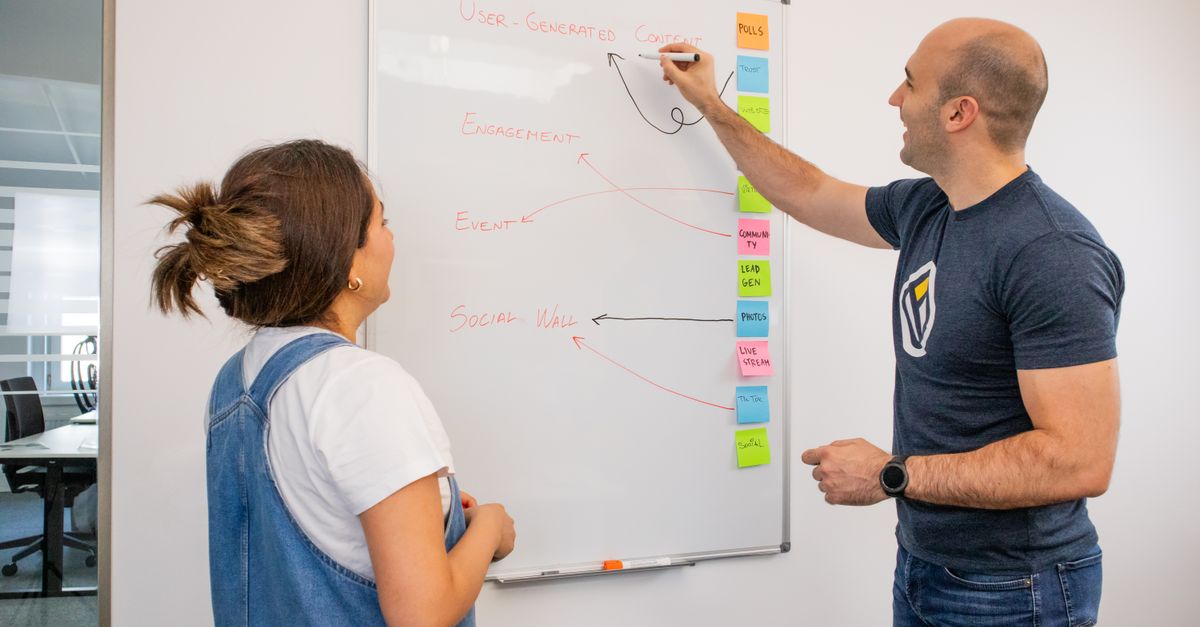
Fractional COOs make high-stakes decisions across multiple organizations simultaneously. Here's the decision framework that prevents analysis paralysis and drives results.

The iPaaS market is projected to reach $108 billion by 2034. Here's how fractional COOs evaluate, implement, and maintain software integrations that deliver real ROI.

A fractional COO without a real-time analytics dashboard is flying blind across multiple organizations. Here is the tool stack, KPI framework, and implementation playbook that separates data-driven operators from expensive guessers.

69% of small businesses spend more per employee on compliance than larger competitors. A fractional COO navigating multiple regulatory environments needs a systematic framework to protect every client simultaneously.

Gallup found that 70% of team engagement is attributable to the manager. Fractional COOs must develop internal leaders who carry the mission when the COO isn't in the room.

Quality slips are the fastest way to lose a client. A fractional COO managing four engagements needs a QA framework that catches problems before the client does — without consuming half your billable hours.

Cost center management forms a critical component of successful fractional operations, helping businesses maintain financial clarity and operational efficiency.

Workflow automation delivers 240% average ROI within 6-9 months. Here's the fractional COO playbook for identifying, prioritizing, and implementing workflow improvements.

Managing operational risk across multiple organizations simultaneously is the defining challenge of fractional leadership. Here is a practical risk assessment framework built for multi-client operations.

A fractional COO managing four clients without a knowledge management system loses 8-12 hours per week hunting for information that should be at their fingertips. Here is how to build a KM system that scales.

Digital transformation challenges overwhelm many companies, leading to a rising demand for experienced fractional COO services focused on Industry 4.0 implementation.

Fractional COOs serving 3-5 clients need disciplined resource allocation to avoid burnout and underdelivery. Here's the framework that works.

A Fractional COO can transform your customer service operations by bringing high-level strategic expertise without the cost of a full-time executive.

Your client hired you to run operations, not to run an innovation lab. But operational innovation — finding better ways to do existing work — is where fractional COOs create the most value. Here is how to drive it in 10-15 hours per week.

Most fractional COO contracts are either too vague to be enforceable or too rigid to allow the engagement to succeed. Here's how to negotiate terms that protect both sides, with real clause language you can adapt.

Operational excellence is not a destination — it is a system. A fractional COO installs that system at 30-50% of a full-time executive's cost and measures it with specific KPIs. Here is the framework.

70% of change initiatives fail or underperform. For fractional COOs hired specifically to drive change, that statistic is both your biggest threat and your biggest opportunity. Here is the playbook that beats the odds.

The right incentive structure aligns a fractional COO's compensation with the outcomes you hired them to deliver. Here are the five models that work, with specific numbers, equity ranges, and contract language.

Professional services firms run on utilization rates, client retention, and delivery consistency. A fractional COO improves all three by building the operational infrastructure that most firms neglect in favor of revenue generation.

The VMS market is projected to reach $17 billion by 2030. Here's how fractional COOs use vendor management systems to cut costs 15-25% and eliminate procurement chaos.

53% of retail and 50% of professional services firms cite new market entry as their top growth priority. A fractional COO gives you the operational firepower to execute expansion without the $250K+ salary commitment.

65% of executives rank supply chain costs as their top optimization lever. A fractional COO with supply chain expertise can deliver 10-30% operational cost reduction without the $400K commitment of a full-time VP of Supply Chain.

50-70% of BPR projects fail. But when done right, successful initiatives deliver 30-50% cycle time reduction and 20-40% cost savings. A fractional COO brings the methodology and discipline to land on the right side of those odds.

Training programs for fractional COOs help organizations maximize the benefits of their part-time executive leadership while ensuring smooth integration with existing teams and processes.

Agile operations paired with fractional leadership can transform how businesses scale and adapt in competitive markets.

Managing compliance effectively becomes uniquely challenging when operating as a fractional COO, where you must handle multiple organizations' regulatory requirements simultaneously.

Abstract success stories are useless. Here are four composite case studies from real fractional COO engagements with specific numbers: what the company looked like before, what changed, and the measurable results.

Insurance operations have unique compliance, claims, and underwriting challenges that generic fractional COOs miss. Here is a sector-specific implementation guide with the KPIs, regulatory considerations, and technology stack that matter in insurance.

Your reporting system is how you prove your value, drive decisions, and justify your retainer every month. Here is how to build a performance reporting framework that works across multiple clients without drowning in data.

73% of companies increased automation spending last year. Here's how fractional COOs evaluate technology stacks and make investment decisions that deliver measurable ROI.

A Fractional COO works as a part-time executive leader, bringing strategic operations expertise to businesses that need high-level guidance without the full-time commitment.

A fractional COO stepping into different organizations must skillfully handle various cultural landscapes while maintaining operational efficiency.

25% of U.S. businesses now use fractional executives. Here's the step-by-step playbook for small businesses to implement a fractional COO and get measurable ROI.

A fractional COO running four clients needs a project management framework that adapts to startups, manufacturing firms, and professional services without rebuilding from scratch each time. Here is the meta-framework that works across all of them.

Measuring success for fractional COOs requires tracking specific metrics that demonstrate value and impact across different industries.

A fractional COO with access to four companies' financial data, customer records, and strategic plans is a single breach away from destroying multiple businesses simultaneously. Here is how to build an airtight security posture.

Planning a smooth transition is essential when ending a fractional COO engagement to maintain business continuity and preserve relationships.

Workplace conflict costs U.S. businesses $359 billion annually. For fractional COOs navigating multiple organizations simultaneously, the stakes multiply. Here is a proven resolution framework.

Every fractional COO partnership carries financial, operational, and legal risk for both sides. A structured assessment before engagement prevents the disputes that kill 30-40% of fractional relationships prematurely.

Healthcare practices face 12-15% claim denial rates, rising patient collection challenges, and HIPAA compliance requirements that generic operations leaders can't navigate. Here's how to implement a fractional COO who actually understands healthcare.

Operating as a fractional COO across borders introduces legal complexity that domestic engagements never face. Here is the contract framework, tax structure, and compliance checklist for international fractional COO services.

Running international operations with a fractional COO is not just possible — it is often more effective than a full-time exec who has only worked in one market. Here is how to structure it across time zones, cultures, and regulatory environments.

Change management requires skilled leadership to guide organizations through transitions while maintaining productivity and employee engagement.

The fractional executive market has surpassed $5.7 billion and is growing at 14% annually. Here is a data-driven analysis of where the fractional COO market stands, who is buying, and what it costs.

Most fractional COO interviews ask the wrong questions. Skip the generic leadership prompts and use these 30 questions designed to expose whether a candidate can actually build and run operations — or just talk about it.

75% of SMBs are already investing in AI, and growing businesses are nearly twice as likely to adopt it. For fractional COOs, technology fluency is no longer optional — it is the competitive moat that separates $5K/month operators from $15K/month ones.

Many growing businesses need high-level strategic leadership but can't justify the cost of a full-time C-suite executive.

A fractional COO with unclear authority is worse than no COO at all. Here's the decision-making framework that defines what they can own, what needs approval, and how to prevent the daily friction that kills fractional engagements.

Revenue growing but profits flat? Teams working harder but output not scaling? These are the classic signals that you have outgrown founder-led operations and need a fractional COO. Here is when to hire one and exactly what to expect.

A fractional COO operating without proper insurance is one client lawsuit away from personal bankruptcy. Here is exactly what coverage you need, what it costs, and what most practitioners get wrong.

Most objections to fractional COO services are based on outdated assumptions. Here are seven myths I hear repeatedly from founders, and the operational reality behind each one.

Fractional COO technology integration combines the expertise of experienced operational leaders with modern tech solutions to optimize business processes.

Fractional COO arrangements create specific risks that full-time hires do not. Here is a practical framework covering contracts, data security, knowledge continuity, and the insurance policies you actually need.

Fractional COO services help businesses access high-level operational expertise without the overhead of a full-time executive.

IP litigation costs $475,000 on average and takes three years to resolve. For fractional COOs working across competing industries, one careless knowledge transfer can trigger it. Here is how to protect yourself and your clients.

Most fractional COOs use too many tools. Here is the lean tool stack I run across all my clients, what each tool does, what it costs, and how to avoid the tool sprawl that kills operational efficiency.

A composite case study drawn from patterns across typical engagements: how a fractional COO took a $4.2M e-commerce operation from 5% to 43% annualised growth in eight months.

58% of remote employees with regular leadership contact report higher trust. But some operations require physical presence. Here's how to choose the right model.

Retail's digital transformation market will hit $487 billion by 2030. A fractional COO helps you capture your share without the $300K+ full-time executive price tag.

Your revenue hit $3M but growth has stalled. Projects ship late. Your best people are burning out. These are the signals that your company has outgrown founder-led operations and needs a COO.

The Chief Operating Officer COO manages an organization's daily operations, ensuring efficiency, productivity, and alignment with business goals.

A Fractional COO needs a strong technology stack to effectively manage operations across multiple organizations and deliver maximum value to clients.

A Fractional COO steps in to lead crisis management when businesses face unexpected challenges or disruptions.

Data-driven decision making transforms how fractional COOs guide companies through strategic choices and operational improvements.

Many Chief Operating Officers COOs work with executive assistants to manage their demanding schedules and responsibilities effectively.

A Fractional Chief Operating Officer COO brings high-level operational expertise to businesses without the commitment of a full-time executive.

A fractional COO is a part-time Chief Operating Officer who embeds inside your company 2-4 days per week, builds the operational infrastructure you're missing, and leaves before you need a full-time hire. Here's exactly how the model works.

Most fractional COO engagements fail or underperform because of weak onboarding. Here is the exact 90-day playbook I use to go from signed contract to measurable operational impact.

Real fractional COO pricing data from Toptal, Bolster, and independent practitioners. Hourly rates, retainers, project fees, and equity structures broken down by company size and engagement type.

A bad fractional COO hire costs you more than money. It costs you 3-6 months of operational momentum. Here are 12 warning signs I have seen derail engagements, and how to screen for them before signing.

Fractional COO services typically return 3-5x the investment within the first year. Here is exactly how to calculate the ROI for your company, with real cost benchmarks and a framework you can use today.

The fractional executive market doubled from 60,000 to 120,000 professionals in two years. Here are five trends that will define fractional COO services through 2028.

Team resistance kills more fractional COO engagements than incompetence. Here is the integration framework that prevents the political friction, role confusion, and trust gaps that derail part-time leadership.

This is not about which option is better. It is about which option is right for your company at this stage. Here is the decision framework I use with every client, with specific revenue, headcount, and complexity thresholds.

Most founders ask the wrong questions when evaluating fractional COOs. Here are 15 questions that actually predict engagement success, with specific examples of strong and weak answers.

Chief officers outrank directors in virtually every corporate hierarchy. But the gap between these roles is wider than most people realize — in authority, compensation, and scope. Here is exactly how they differ.

In most companies, the President outranks the COO. But the relationship between these roles is more nuanced than a simple hierarchy. Here is how the two roles interact across different organizational structures.

The COO outranks Vice Presidents in virtually every corporate hierarchy. Here is exactly how the two roles differ in authority, compensation, scope, and career progression — with real salary data.

COO stands for Chief Operating Officer — the second-in-command executive who runs a company's daily operations. Here is what the role actually involves, what it pays, and when your company needs one.

The COO and VP are not the same role. The COO is a C-suite executive with company-wide authority. A VP manages one department. Here is exactly how they differ in scope, pay, authority, and career trajectory.

Chief Operating Officer is the standard, universally accepted title. Chief Operations Officer is used occasionally but is not the norm. Here is the definitive answer, plus everything you need to know about what the COO role actually involves.

The CEO is higher. But the more useful question is how the CEO-COO partnership works, why it matters, and what happens when it breaks down. Here is a practical breakdown.

Manufacturing companies averaging 60% OEE are leaving 40% of their production capacity on the table. A fractional COO with lean manufacturing experience can close that gap without the $400K cost of a full-time operations executive.

81% of nonprofits report higher operating costs with an average 15% increase, while 73% face rising program demand. A fractional COO at $3,000-8,000/month solves the operational gap without diverting donor dollars to executive salaries.

Remote fractional COO arrangements save 40-60% over full-time hires, but only when you build the right collaboration infrastructure. Here's how to structure yours.

SaaS companies and marketplace startups benefit most from fractional COO leadership. Here's how to scale operations from product-market fit to Series B without a full-time hire.

The COO outranks the VP of Operations in nearly every corporate structure. Here's exactly how the roles differ in scope, authority, compensation, and career trajectory.

The COO role goes by at least 12 different titles across industries and regions. Here's every alternative, when each is used, and what it signals about organizational structure.

A COO earns $200K-$450K+ and sets company-wide strategy. An Operations Manager earns $60K-$120K and executes within a department. Here's every meaningful difference.

22% of incoming CEOs previously served as COOs. But CEO isn't the only path forward. Here's every career option after the COO role, with data on what works.

Hospital COOs oversee everything from surgical scheduling to Joint Commission readiness. Here's what the role actually involves, what it pays, and how it's evolving in 2025.

The COO is the second-highest-ranking executive in most organizations, earning $200K-$1M+. Here's exactly what the role involves, who fills it, and how to get there.

The COO typically outranks the CFO as second-in-command, but 57% of companies eventually dissolve the COO role. Here's how the hierarchy actually works.

When you are only in the building two days a week, communication failures compound fast. Here is the exact communication system I install at every client to keep operations running between touchpoints.